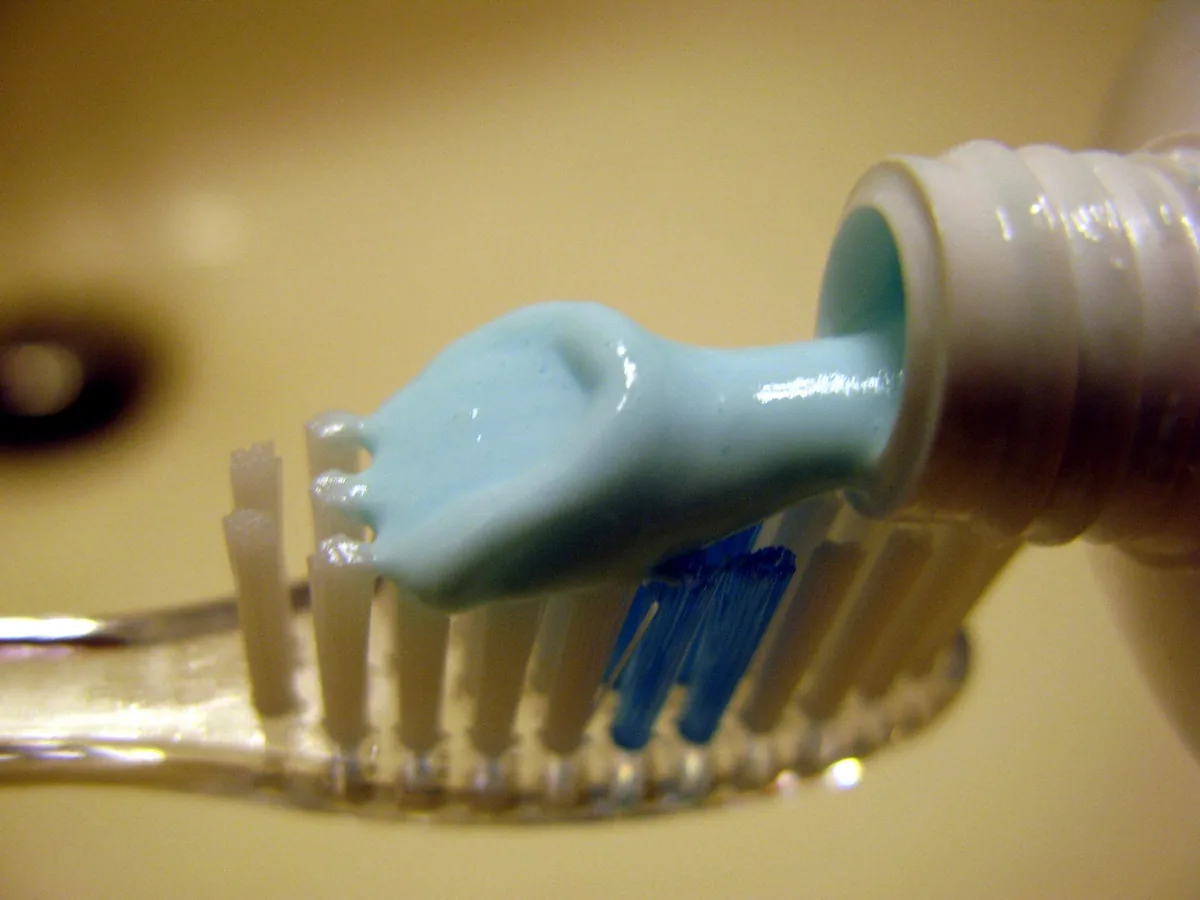
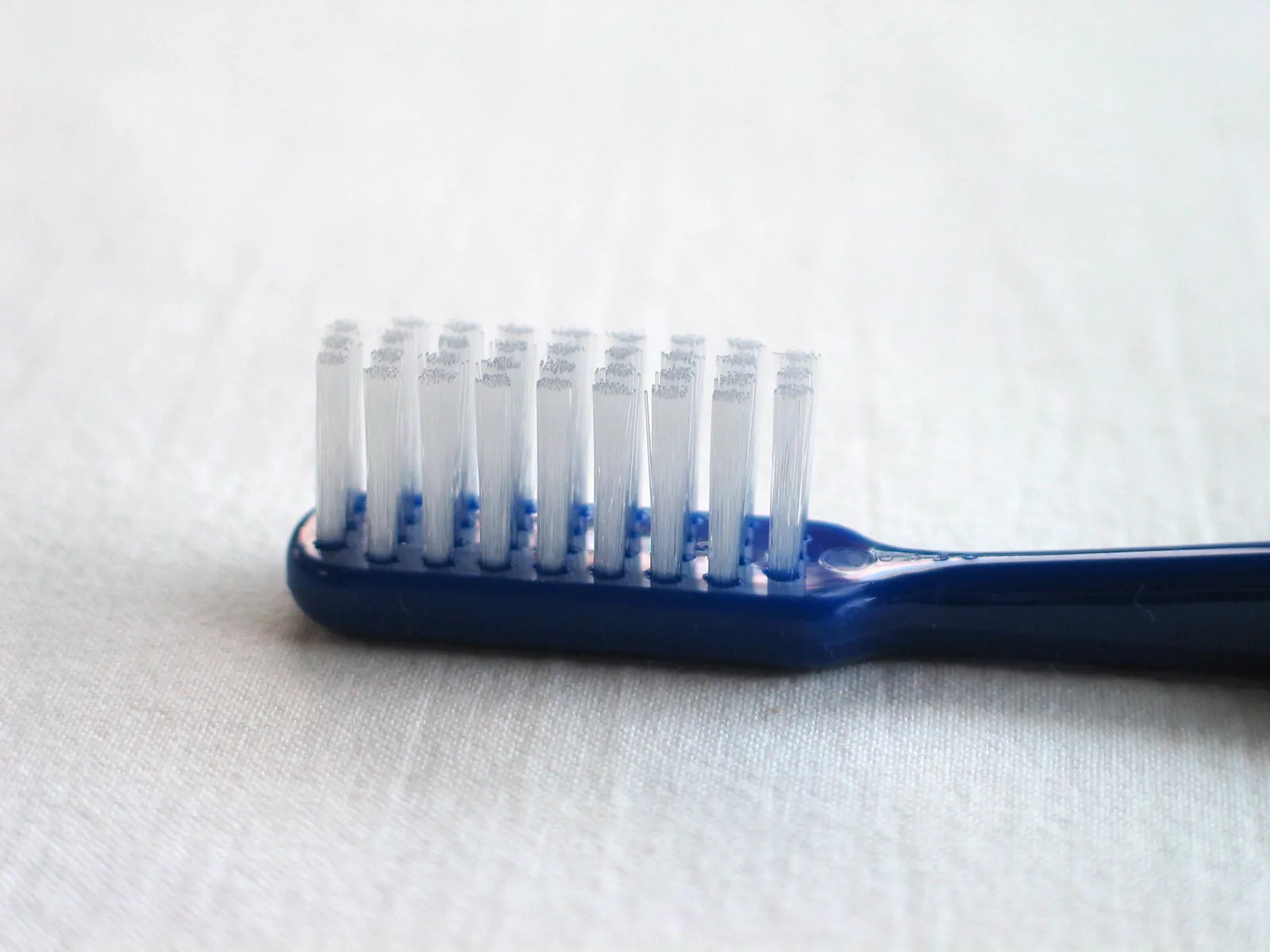
If you only brush, you are cleaning three of the five surfaces on every tooth. The two you are missing are the ones that touch the next tooth along — and those contact points are where plaque sits undisturbed, where decay starts quietly, and where gum disease usually begins.
No amount of good brushing fixes that. The bristles physically cannot get in there.
That is the whole argument for interdental cleaning: once a day, ideally at night, before you brush.
Dental floss
Best for tight contact points and teeth that sit closely together.
It is cheap, available everywhere, and genuinely effective when the technique is right. It is also the most technique-sensitive of the three, which is why so many people give up on it.
Guide the floss gently down, curve it around the side of the tooth into a C shape, and move it up and down against that surface. If it snaps through with a loud click or cuts into the gum, you are pushing straight down with too much force.
Interdental brushes
Best for slight gaps, gum recession, and after orthodontics or gum treatment.
For most people with any space at all between the teeth, these clean more surface area more easily than floss does. They are the easiest of the three to use well.
The catch is sizing. A brush that is too big damages the gum; one that is too small does very little. They come in a range of sizes, and you may need different sizes in different parts of your mouth. Ask a dentist or hygienist to measure rather than guessing.
Water flossers
Worth trying if you have implants, bridges or orthodontic work, or you have tried floss and quietly abandoned it.
They are comfortable, and they may help with bleeding and inflammation — though the evidence for them is thinner and less consistent than for floss and interdental brushes, and nobody has shown they match either. What can be said plainly is the part that matters most: people who get on with one tend to keep using it.
They do not fully replace mechanical cleaning against the tooth surface, and they need daily use to do anything. But a water flosser used every night beats floss that lives unopened in a drawer.
So which one?
Where there is space between the teeth, an interdental brush comes first — that is what UK guidance recommends. Floss where the teeth are too close for a brush to fit. Beyond that, the best interdental cleaner is the one you will still be using in a year. The best interdental cleaner is the one you will use daily, use correctly, and still be using in a year.
Plenty of people use two, because tooth spacing varies across the mouth.
The mistakes worth avoiding
- Cleaning between the teeth only when food gets trapped
- Forcing an interdental brush that is a size too big
- Treating a water flosser as a replacement for everything else
- Stopping because the gums bleed
That last one is the most common and the most counterproductive. Bleeding generally means the gum is already inflamed. Gentle, consistent cleaning is usually what resolves it, and it often settles within a week or two. If it does not, that is worth getting looked at.
Brushing cleans teeth. Interdental cleaning protects gums. Doing both every day is one of the highest-value habits available to you.