On this page5
Plaque is soft. Left undisturbed, minerals from saliva turn it into calculus — tartar — within a couple of days. Calculus is hard, bonded to the tooth, and no toothbrush will shift it.
That is the argument for having it removed professionally. It is not a cosmetic appointment, and it is not a substitute for cleaning at home. What the trials show is narrower than the appointment's reputation: for somebody who attends regularly and whose gums are healthy, a scale and polish on a fixed schedule makes little measurable difference. It earns its place where there are deposits you cannot reach, and where the gums are already inflamed.
Why calculus matters
The problem is not the calculus itself. It is that its surface is porous and rough, so it holds fresh plaque against the gum, continuously, in exactly the place the gum reacts to.
That is how gum inflammation becomes self-sustaining: deposits hold bacteria, bacteria inflame the gum, the gum bleeds and the pocket deepens, and the deeper pocket is harder to clean.
What happens in the appointment
An assessment first. Gum health is usually measured with a fine probe, which records how deep the space between the gum and tooth is, and whether it bleeds. Inflammation alone can deepen that space, so where the readings are deep the next step is to measure the attachment level and take an X-ray to see whether the bone has been affected.
Ultrasonic scaling. A fine tip vibrates very rapidly, breaking the bond between calculus and tooth, with a water spray to cool it. It is a buzzing, tickling sensation and usually painless, though it can be sensitive where gums have receded.
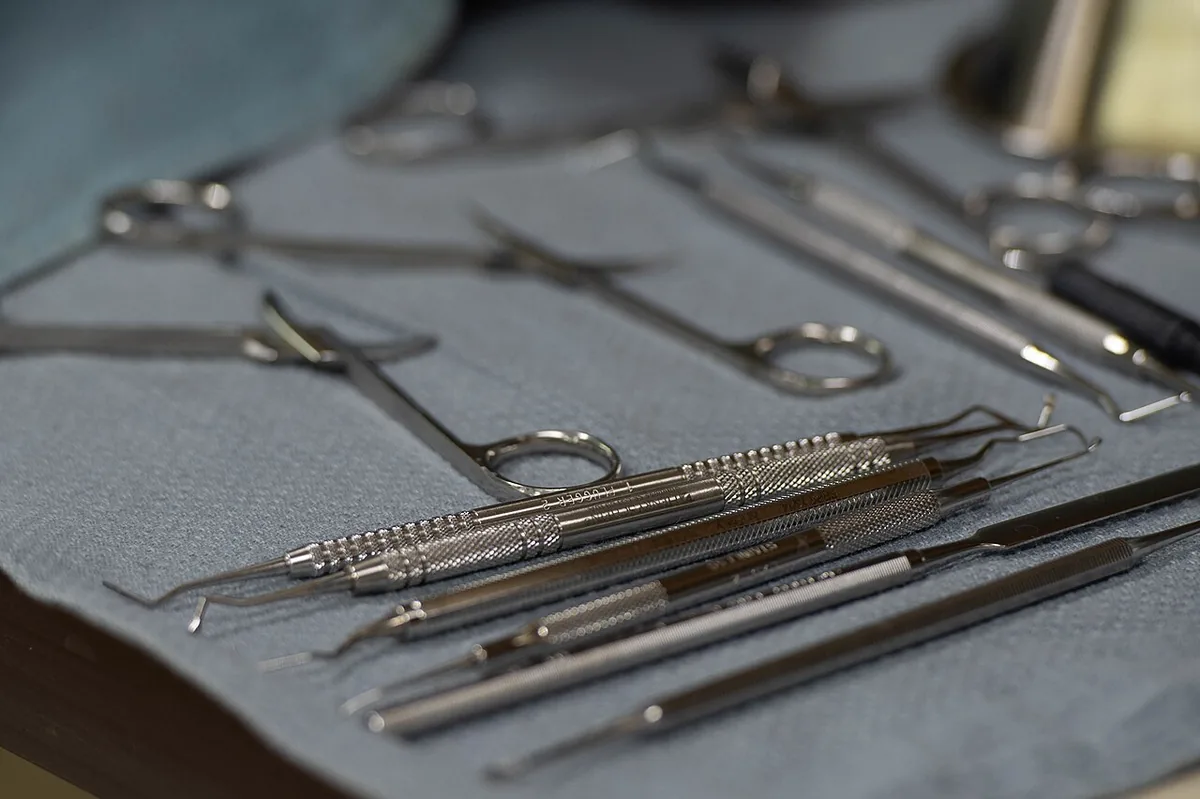
Hand instruments for anything the ultrasonic leaves, especially just below the gum margin.
Polishing, with a rubber cup and paste, or an air-polisher using fine powder and water. This removes staining from tea, coffee and tobacco, and leaves the surface feeling smooth. It is the cosmetic part of the appointment rather than the part that treats anything.
Advice, which is the part people undervalue. A hygienist watching you clean for two minutes will usually identify exactly which area you keep missing.
What it will not do
It will not make your teeth whiter than their natural shade. Removing stain reveals the colour underneath, which is often lighter than you expected — but that is not whitening.
It will not fix gum disease on its own if the deposits go deep below the gum. That needs root surface debridement, which is more thorough, usually done quadrant by quadrant and often with local anaesthetic.
Afterwards
Gums may be tender for a day or two, and teeth can be briefly sensitive to cold, particularly where a lot of deposit has come away from near the gum.
If your gums bleed heavily during it, that is information: healthy gums do not bleed much when cleaned. It means there was inflammation there already.
How often
There is no universal answer, and six months is a convention rather than a finding. Someone with healthy gums and little deposit may need it rarely. Someone with a history of periodontitis may need three-monthly maintenance indefinitely, because the interval is what keeps it stable.
A scale and polish resets the clock. What happens next is decided by what you do daily, not by the appointment.