On this page5
Of everything in this library, this is the factor with the largest effect on how someone’s mouth ages. It is also the one with the clearest evidence.
The bleeding problem
This is the part people find most surprising. A smoker’s gums bleed less than they should for the amount of inflammation present. Exactly why is not settled — reduced blood flow, a thicker surface layer, and the heat and chemicals themselves have all been proposed, and the nicotine explanation usually given is not firmly established in people. The finding itself is not in doubt, and it is the finding that matters: the warning sign goes quiet while the disease does not.
The usual early warning for gum disease — bleeding when you brush — is therefore muted or absent. The disease progresses quietly, and it is often found later and further along. Healthier-looking gums, worse underlying condition.
What else it does
Impairs healing. Smokers heal more slowly after extractions and have substantially higher rates of dry socket. Gum treatment responds less well. Implants fail around twice as often in smokers, and the tissue around the ones that survive is more likely to become inflamed — worth knowing before paying for them.
Accelerates bone loss around teeth, which is the part of gum disease that does not come back.
Causes staining, tar on enamel and in the microscopic cracks, which no toothpaste removes.
Causes bad breath and dulls taste and smell — both of which recover after stopping, often noticeably within weeks.
Raises oral cancer risk significantly. Combined with alcohol the effect is not additive but multiplicative, so the two together are far worse than either alone.
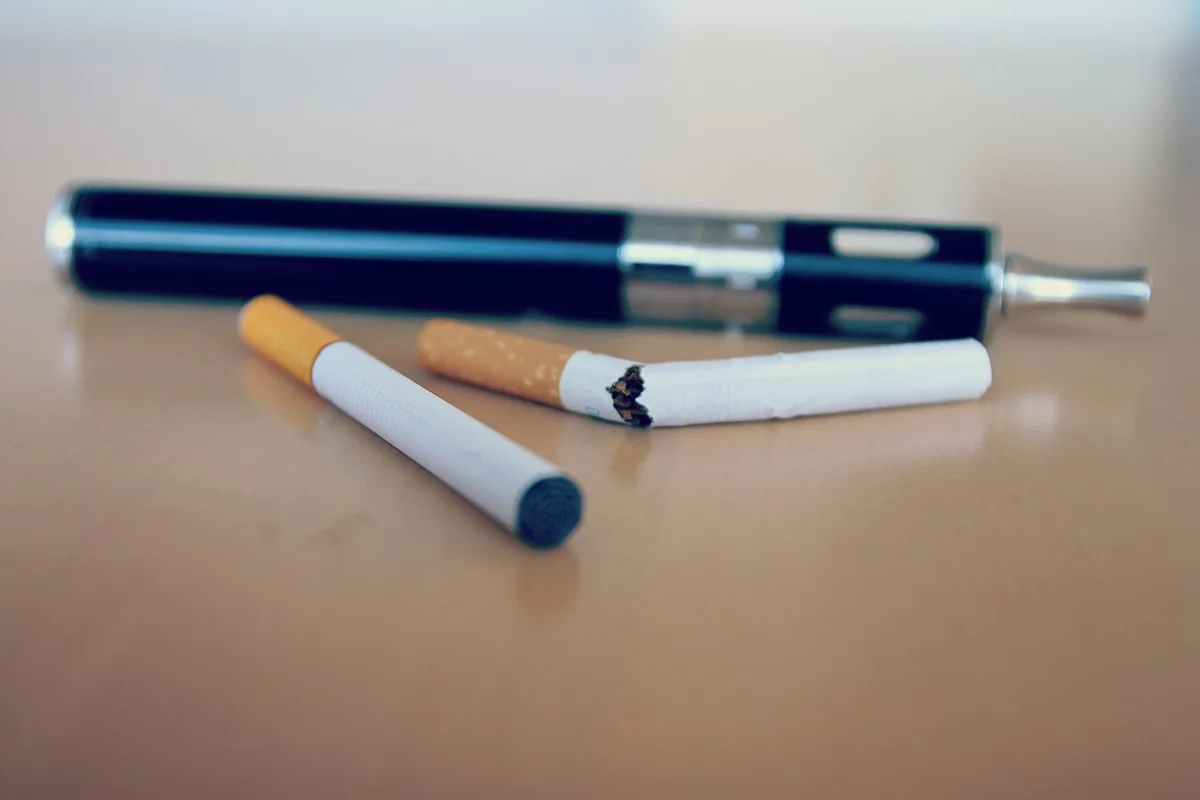
Vaping
The honest position is that vaping is less harmful than smoking and not harmless, and the long-term oral evidence is still developing because the products have not existed long enough.
What the evidence shows so far:
- Measured gum health in people who vape and have never smoked sits close to non-users, and well clear of smokers
- For somebody who smokes, switching appears to improve gum disease, though the evidence for that is limited
- If you do not smoke, there is no oral health reason to start — least of all if you are young
What is not known:
- Whether vaping masks bleeding the way smoking does. The mechanism behind that masking in smokers is itself unsettled, so this is a reasonable worry rather than an established fact
- Dry mouth and gum irritation are commonly reported by users, but mostly by people who also smoke or used to, so the reports are hard to pin on vaping
- Whether sweetened liquids raise decay risk
- What decades of vaping does. The products have not existed long enough
For somebody smoking now, switching is a clear improvement. It is not the same as having stopped, and it should not be treated as a neutral habit.
What stopping does, and how fast
Expect your gums to bleed more for the first few months, not less. That is the suppression lifting, and it means you are seeing what was there all along. Over months, gum treatment starts working as well for you as for someone who never smoked. Healing after extractions improves. Taste and smell return. Staining stops accumulating, and existing stain can be removed.
Long-term cancer risk falls steadily over the years after stopping, though it does not return immediately to that of someone who never smoked.
Bone already lost around teeth does not come back — but losing more is not inevitable, and that is the part still within reach.
Where to get help stopping
Not willpower — the free services roughly triple the odds, and they are genuinely easy to reach:
- England — NHS Better Health, or ask at any pharmacy
- Scotland — Quit Your Way Scotland
- Wales — Help Me Quit
- Northern Ireland — Stop Smoking Support, through pharmacies and trusts
A GP, a pharmacist and your own dentist can all refer you, and a dentist raising it is doing their job rather than disapproving.
If you smoke, stopping will do more for your mouth than any change you could make to how you brush it.