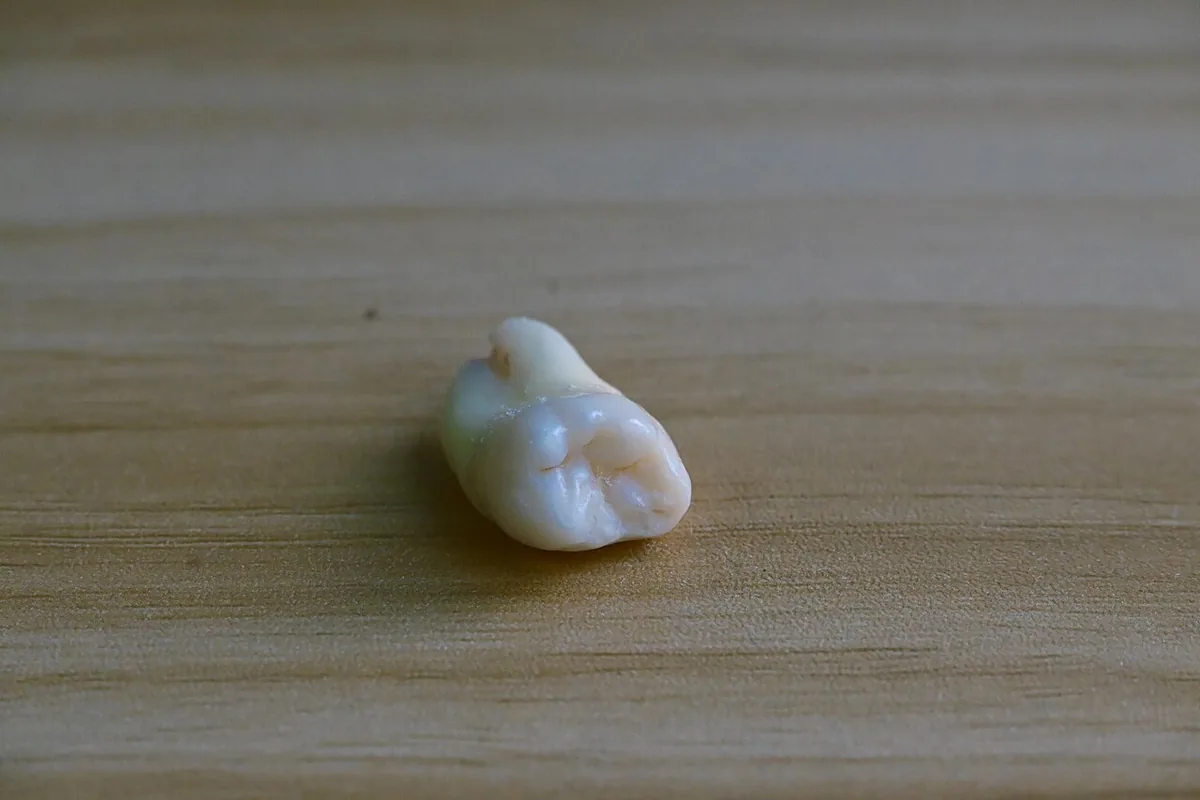
Wisdom teeth arrive, if they arrive at all, somewhere between seventeen and twenty-five. Some come through perfectly. Some come through partly. Some never appear, and a proportion of people never develop them.
For most of the twentieth century they were removed as a matter of course. UK guidance changed: a wisdom tooth that is causing no problem is normally left alone, because surgery carries risk and most of them never cause trouble.
When removal is justified
Recurrent pericoronitis. A partly erupted wisdom tooth has a flap of gum over it that traps food and bacteria. It becomes swollen, painful and sometimes infected. A mild first episode is usually just managed; one particularly severe episode, or repeated episodes, is the usual trigger for removal.
Decay that cannot be restored — either in the wisdom tooth itself, or caused by it in the tooth in front, which is often the more serious problem of the two and the harder one to spot.
Gum disease localised around it that cannot be controlled.
A cyst or other pathology associated with an unerupted tooth.
It is damaging the tooth in front, by pressing on its root.
It has no opposing tooth and has over-erupted, biting into the gum opposite.
When it is not
- It is fully through, cleanable and causing nothing
- It is buried in bone, symptom-free, and found incidentally on an X-ray
- Someone has suggested it will "push your front teeth crooked" — the evidence does not support wisdom teeth as a meaningful cause of front tooth crowding
The nerve question
Two nerves run close to lower wisdom tooth roots: one supplying sensation to the lower lip and chin, one to the tongue. Removing a lower wisdom tooth carries a small risk of altered sensation — usually temporary, occasionally permanent.
The risk depends on how close the roots sit, which is why a panoramic X-ray is taken first, and sometimes a 3D scan. That risk should be explained to you specifically, with reference to your own X-ray, not as a general caution.
Where the nerve is very close, a coronectomy — removing the crown and deliberately leaving the roots — is sometimes offered as a lower-risk option.
What removal involves
Straightforward ones come out much like any other tooth. A surgical extraction means a small incision, sometimes removing a little bone, and often sectioning the tooth so it comes out in pieces rather than being forced whole. Stitches are common.
Expect more swelling and more jaw stiffness than an ordinary extraction, peaking around day two or three. Lower wisdom teeth carry a higher dry socket risk than other teeth, so the no-smoking, no-rinsing, no-straws advice for the first day matters more here, not less.
The question is never "should wisdom teeth come out". It is "is this specific tooth causing, or about to cause, a specific problem".